Overview
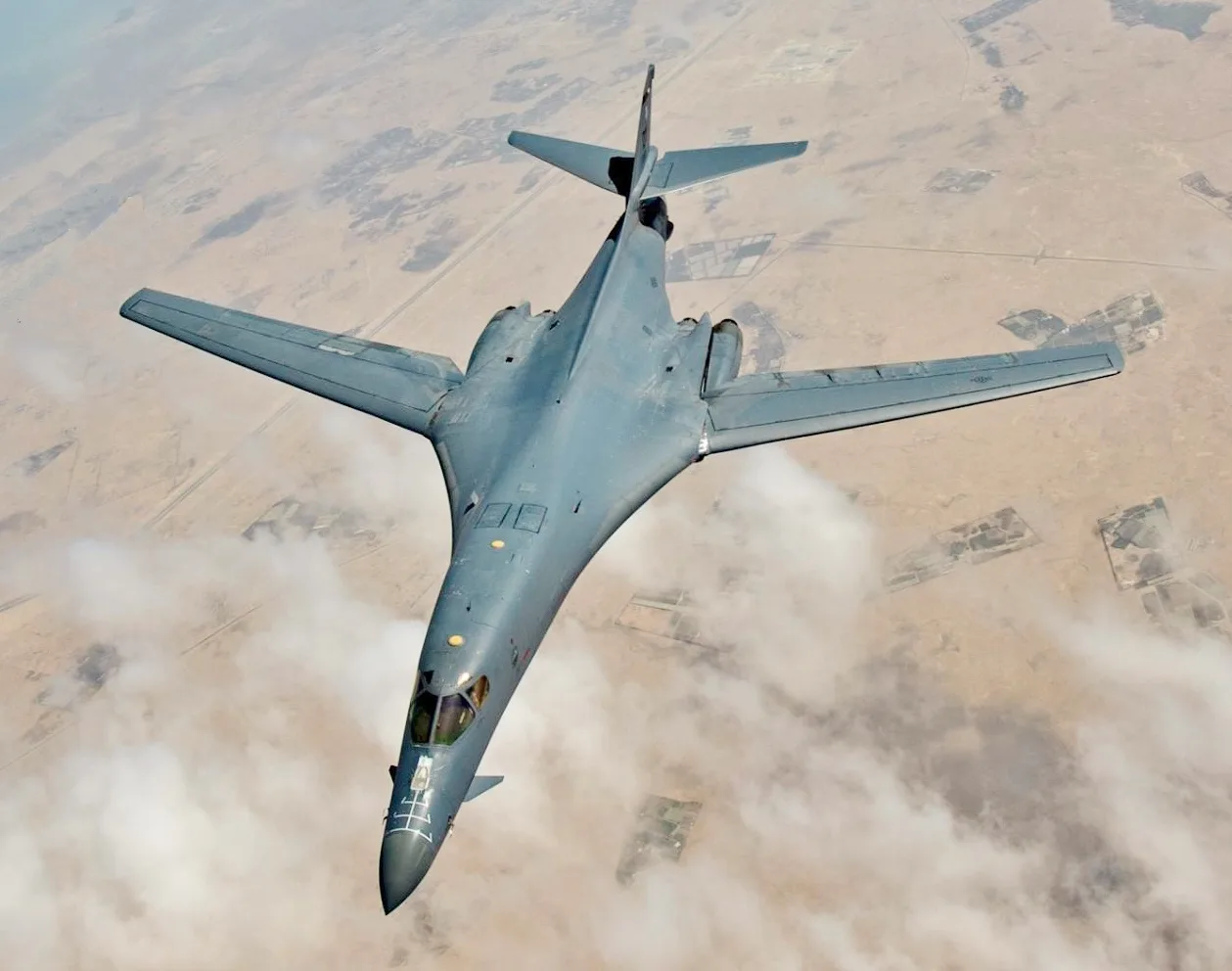
The B-1B is a long-range bomber whose wings sweep forward for take-off and back for high-speed flight. Its predecessor, the B-1A, was cancelled in 1977, but the programme was revived and 100 B-1Bs were built in the 1980s.
Originally a nuclear bomber, the "Bone" now carries only conventional weapons and has the largest internal payload of any US bomber, with three weapons bays.
Specifications
Dimensions
| Length | 44.50 m |
|---|---|
| Wingspan | 41.80 m |
| Height | 10.40 m |
| Wing area | 181.2 m² |
Weights & fuel
| Empty weight | 87,100 kg |
|---|---|
| Max. take-off weight | 216,400 kg |
| Max. payload | 34,000 kg |
Performance
| Max. speed | 1,335 km/h |
|---|---|
| Max. Mach | Mach 1.25 |
| Range | 9,400 km |
| Combat radius | 2,990 km |
| Service ceiling | 18,000 m |
Crew & capacity
| Crew | 4 |
|---|---|
| Hardpoints | 6 |
Powerplant
| Engines | 4 |
|---|---|
| Engine model | General Electric F101-GE-102 |
| Thrust (each) | 75.6 kN |
| Thrust with afterburner (each) | 136.9 kN |
Figures are compiled from public sources and may be approximate; they can vary by variant and configuration.
Armament
- Up to about 34,000 kg of weapons in three internal bays
- JDAM guided bombs, JASSM and LRASM cruise missiles
Did you know?
Crews call it the "Bone", from "B-One".
Photos
Photo 1: USAF / Wikimedia Commons · Public domain
Some text and images come from Wikipedia / Wikimedia Commons under CC BY-SA licences.