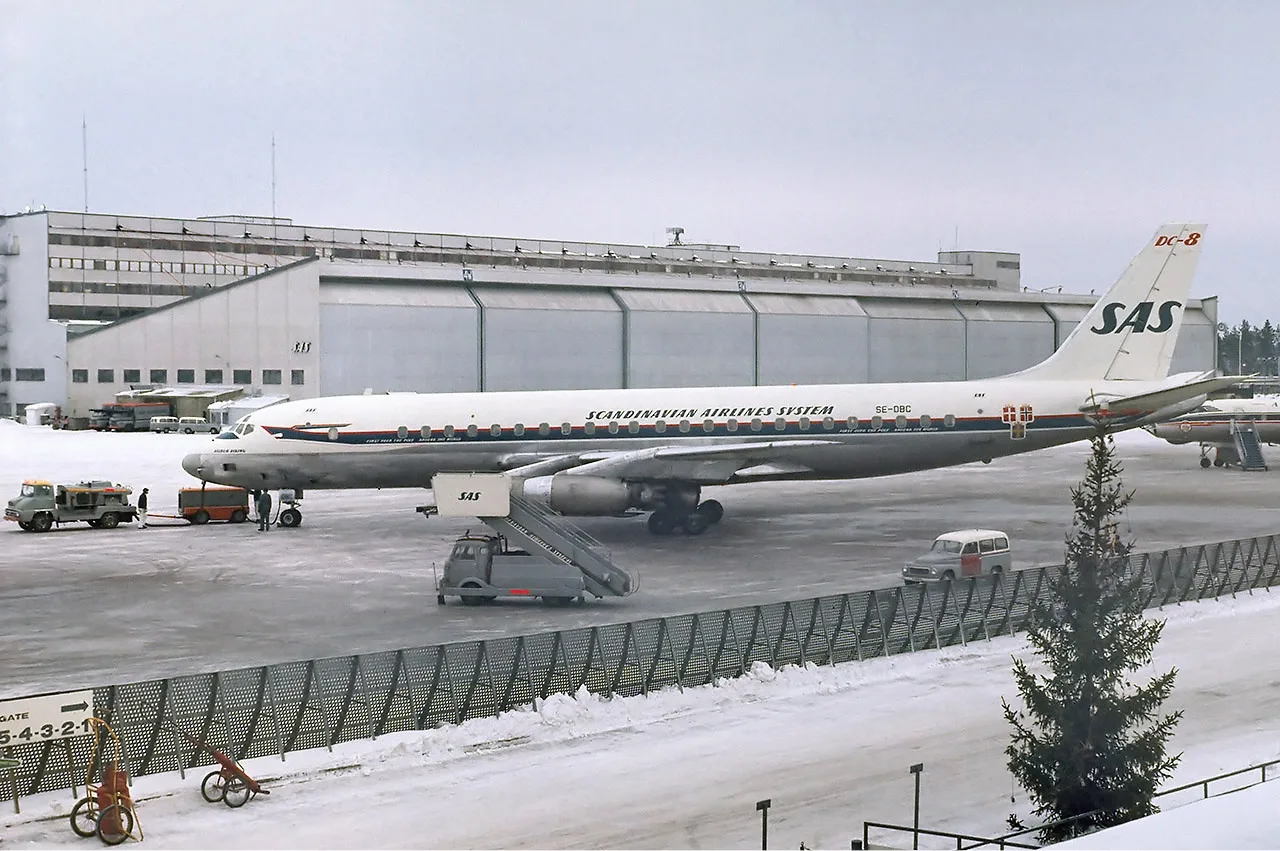
Overview
The DC-8 was Douglas's first jet airliner, entering service with United and Delta in 1959, a year after the 707. It sold fewer than its Boeing rival, but the stretched "Super Sixty" models of the late 1960s, such as the DC-8-63 shown here, were the largest airliners in the world until the 747 arrived.
Re-engined with CFM56 turbofans as the DC-8-70 series, many flew as freighters for decades. NASA used one as a flying science laboratory until 2024.
Specifications
Dimensions
| Length | 57.12 m |
|---|---|
| Wingspan | 45.23 m |
| Height | 12.92 m |
| Wing area | 271.9 m² |
Weights & fuel
| Empty weight | 69,739 kg |
|---|---|
| Max. take-off weight | 158,760 kg |
Performance
| Cruise speed | 870 km/h |
|---|---|
| Max. Mach | Mach 0.88 |
| Range | 7,200 km |
| Service ceiling | 12,500 m |
Crew & capacity
| Crew | 3 |
|---|---|
| Seats (max.) | 259 |
Powerplant
| Engines | 4 |
|---|---|
| Engine model | Pratt & Whitney JT3D-7 |
| Thrust (each) | 84.5 kN |
Figures are compiled from public sources and may be approximate; they can vary by variant and configuration.
Did you know?
In 1961 a DC-8 broke the sound barrier in a controlled dive during a test flight — the first civil jet airliner to do so.
Photos
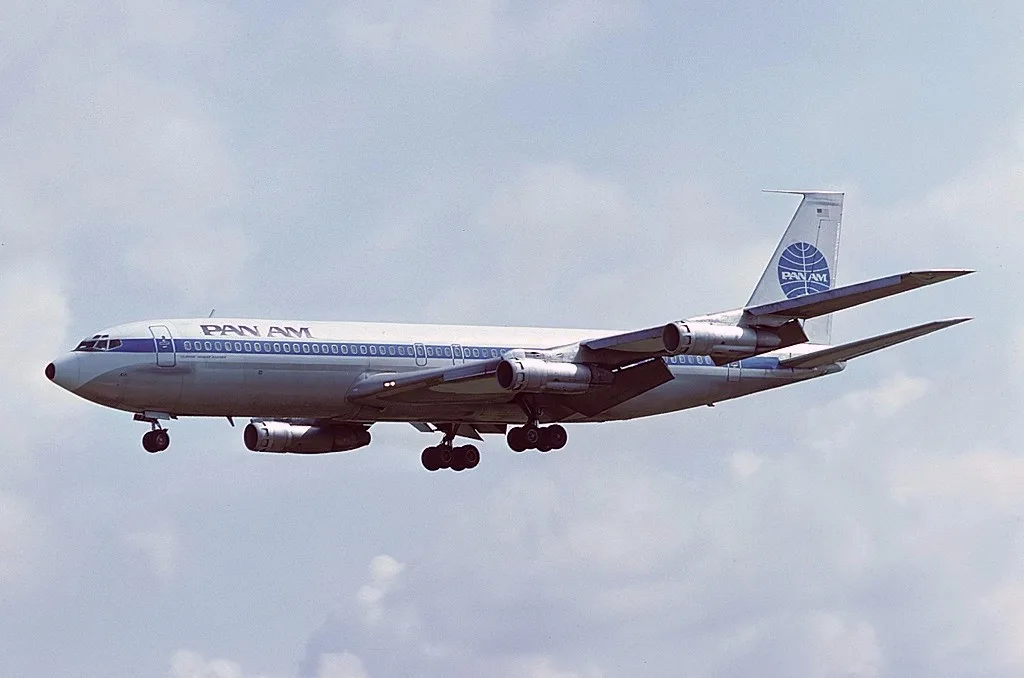
Photo 1: Lars Söderström / Wikimedia Commons · CC BY-SA 3.0
Some text and images come from Wikipedia / Wikimedia Commons under CC BY-SA licences.