Overview
The Comet began the jet age when BOAC launched the first jet passenger service, from London to Johannesburg, in May 1952. With its four engines buried in the wing roots, it flew twice as fast and far higher than piston airliners, above most bad weather.
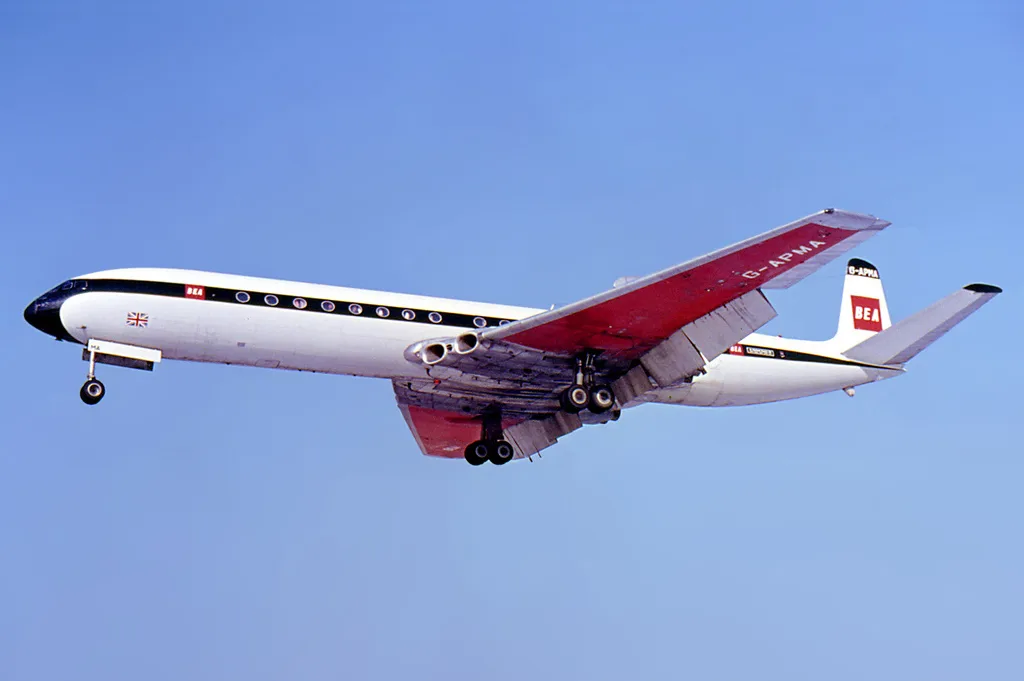
In 1954 two Comets broke up in flight because of metal fatigue around the square-cornered windows. The long investigation taught the whole industry how to design pressurised fuselages safely. The redesigned Comet 4, shown here, flew the first transatlantic jet services in 1958 and led to the RAF's Nimrod patrol aircraft.
Specifications
Dimensions
| Length | 33.99 m |
|---|---|
| Wingspan | 35.05 m |
| Height | 8.99 m |
| Wing area | 197.0 m² |
Weights & fuel
| Empty weight | 34,200 kg |
|---|---|
| Max. take-off weight | 73,500 kg |
Performance
| Max. speed | 846 km/h |
|---|---|
| Cruise speed | 809 km/h |
| Range | 5,190 km |
| Service ceiling | 12,800 m |
Crew & capacity
| Crew | 4 |
|---|---|
| Seats (typical) | 81 |
| Seats (max.) | 119 |
Powerplant
| Engines | 4 |
|---|---|
| Engine model | Rolls-Royce Avon 524 |
| Thrust (each) | 46.7 kN |
Figures are compiled from public sources and may be approximate; they can vary by variant and configuration.
Did you know?
The rounded windows on every airliner today are a direct lesson from the Comet disasters.
Photos
Photo 1: BEA_De_Havilland_DH-106_Comet_4B_Manteufel.jpg: Ralf Manteufel derivative work: Altair78 (talk) / Wikimedia Commons · GFDL 1.2
Some text and images come from Wikipedia / Wikimedia Commons under CC BY-SA licences.